Lost Stories Gem #33
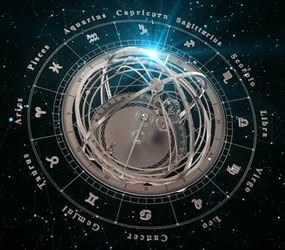
Revealing God’s Message in The Zodiac
The idea that God placed a message in the stars has been dismissed, distorted, and outright rejected by mainstream Christianity for centuries. Yet when you examine Scripture carefully, a startling truth emerges: a biblical perpective of The Zodiac may be one of the most overlooked revelations of God’s creative power and redemptive plan.
At The Lost Stories Channel, we believe that truth emerges only when we harmonize artistic, scientific, and theological perspectives. The conversation about The Zodiac is a perfect case study in how a single-discipline approach blinds us to remarkable truths. If you mention The Zodiac in church, you’ll likely be met with suspicion or dismissal. But ask yourself: Would God really create the stars without a purpose? And if He adorned the heavens with these celestial wonders, then wouldn’t He intend them to reveal something unique about His divine design?
Why The Zodiac Became Forbidden Territory
The roots of our skepticism run deep. Early heresies like Gnosticism rejected the idea that the God of Scripture created the heavens at all, arguing instead that a lesser, inferior deity made them. This meant the stars could reveal nothing true about God. Later, medieval Christianity acknowledged that God created the heavens but insisted that Satan’s intervention had so corrupted any message in them that it was now hopelessly lost.
Most modern believers land somewhere in between these two perspectives: they accept that God made the stars, but they deny that He intended any revelatory message within them. So, when people do consider The Zodiac at all, they assume it addresses only human needs and concerns: which job to pursue, whom to marry, what fortune awaits, those sorts of things. Never do they ever imagine that it could contain a biblically-oriented message about God’s sovereignty and redemption.
Those who profit from such confusion about this subject use a simple but effective strategy: they hammer away at every known abuse of anyone who looks to the stars for a hidden message. Point to the Israelites who sought guidance from stargazers during Babylonian captivity. Quote Isaiah’s warnings about astrologers and fortune tellers. Ridicule anyone who even dares to mention that there’s more to the stars than meets the eye. And finally, repeatedly and emphatically, insist: anyone who sees any kind of message in the stars is either a fool or a heretic.
But what if there’s actually more to the picture?
What Scripture Actually Says About the Stars
The Bible speaks far differently about the heavens than popular opinion suggests. Consider these passages:
The prophet Amos commanded, “Seek Him Who made the Seven Stars and Orion”
The psalmist declared, “God knows exactly how many stars there are, having given each and every one a name of its own”
Job marveled, “It’s God Who sealed up the stars and He alone Who spread out the Heavens, Who made Arcturus, Orion, and the Pleiades”
Notice the language: these aren’t incidental details. The stars are named. They’re known. They’re works of wonder.
But the most revealing statement comes from the very beginning of Scripture:
“And God said, ‘Let there be lights in the firmament of the Heaven to divide the day from the night; and let them be for signs and for seasons, and for days and for years.’” (Genesis 1:14)
The Hebrew word for “signs” is owth, which means a signal, flag, beacon, monument, omen, or evidence. From this, we see that God didn’t create the stars just to mark time. He also created them as signals, designed to reveal something specific.
The Heavens Declare a Message
King David wrote in Psalm 19: “The Heavens declare the glory of God, and the firmament reveals His handiwork. From day to day, it speaks forth; night after night, it displays knowledge.”
The word “knowledge” used here carries profound meaning. It comes from the Hebrew root yada, which describes knowledge gained through observation, discovery, and careful consideration. The heavens were designed to be read and understood.
So what is this message? John’s Gospel provides the answer: “The Word became flesh and dwelled among us. We’ve seen His glory, the glory of the one and only Son from the Father, full of grace and truth.” From this, we see, unmistakably: Jesus is the glory of God. So, if the heavens declare God’s glory, then they must declare Jesus. They must declare the glory of Christ.
And remarkably, upon further inspection, they do.
The Four Signs and the Four Gospels
Consider an extraordinary correspondence embedded in Scripture itself. When Moses organized the tribes of Israel around the Tabernacle in the Wilderness, each tribe carried at its head a banner that displayed its unique emblem:
Judah, facing the east—a lion
Reuben, facing the south—a man
Ephraim, facing the west—a bull
Dan, facing the north—an eagle or scorpion
These four tribal standards appear again in The Book of Revelation, where John describes the Four Living Creatures around God’s throne: a lion, a man, a bull, and an eagle. Theologians connect these Four Creatures to the four Gospels, each representing a unique aspect of Christ:
Matthew’s Gospel of Christ as King corresponds with the lion of Leo
Luke’s Gospel of Christ as Son of Man corresponds with the man of Aquarius
Mark’s Gospel of Christ as Servant corresponds with the bull of Taurus
John’s Gospel of Christ as Son of God corresponds with the eagle, or its counterpart, the scorpion of Scorpio
This connection isn’t merely a modern interpretation. A sixth-century Jewish synagogue, the Bet Alpha Synagogue in northern Israel, contains a zodiacal wheel in its mosaic floor showing precisely these connections: the lion next to Leo, the man next to Aquarius, the bull next to Taurus, and the scorpion next to Scorpio.
The symbolism weaves through multiple dimensions of God’s creation, revealing that The Zodiac really does declare the glory of Christ.
The Sphinx and the Proper Beginning
Here’s where the puzzle becomes even more compelling. The Denderah Zodiac, painted on the ceiling of the Temple of Esneh in Upper Egypt, contains an unusual feature: the image of the Sphinx positioned between Virgo and Leo.
As it turns out, the word “sphinx” means to “bind together.” So its placement suggests something that our modern intepretation of The Zodiac has lost: the proper starting point of the message. The Zodiac should begin with Virgo and end with Leo, revealing the complete story of Christ’s dual coming.
First, He came through the virgin of Bethlehem as the suffering servant, typified by Virgo. Second, He will come as the Lion of Judah, the righteous instrument of God’s judgment, typified by Leo. The Sphinx, then, binds these two comings together in their proper order.
The Ancient Authors Knew
Naturally, many object to this interpretation, claiming that the names of the Constellations came from Greek and Roman sources, not Scripture. However, the evidence suggests that Job named the Constellations centuries before the Greeks rose to prominence. So then there’s the question: From where did Job gain this knowledge?
And the most obvious answer is: he received it from The Book of Enoch, written by a man Scripture says “walked and talked with God.” In this much-neglected work, we have Enoch himself declaring:
“And now, my children, I know all things, because I heard it from the Lord Himself... I measured and described the stars, a countless multitude... I’ve written down the names of them all.”
Compared to Enoch’s transmission of these ancient truths, then, the Greeks and Romans were Johnny-come-latelies.
Why This Matters Today
The suppression of this knowledge reveals something crucial about the nature of deception. What could be more important to the powers of darkness than to obscure a universal message of redemption written across the very heavens? What greater enemy could there be to humanity’s understanding of God’s sovereignty than those who would cloud this remarkable celestial declaration?
When you step back and see the interwoven strands of symbolism connecting the tribes of Israel, the signs of The Zodiac, the Four Living Creatures, the Gospels, and the attributes of Christ, you’re witnessing something astonishing. It’s not coincidence. It’s intentional design.
In the end, The Zodiac was clearly never intended to provide a crystal ball to determine one’s own personal destiny. Instead, its actual purpose has been to communicate God’s redemptive plan so as to confirm what we see via multiple channels: written Scripture, living history, artistic symbolism, and the very stars themselves. When these perspectives align, we glimpse a truth that single-discipline thinking can never reveal.
At The Lost Stories Channel, we’re committed to recovering these overlooked dimensions of God’s revelation. We believe that common sense, open-mindedness, and the willingness to synthesize diverse sources leads to deeper understanding. As such, The Zodiac is waiting to be rediscovered not as a tool for human fortune telling but as a universal message that testifies to God’s control over creation and His faithfulness across the ages.
More to Explore
The Lost Stories Channel exists to help you recover long-lost knowledge that mainstream education often overlooks, and to harmonize faith, history, and theology in ways that lead to genuine understanding. Whether through blogs, essays, books, audios, and videos, our goal is to show that deeper understanding awaits those who are simply willing to look beyond the narratives they’ve been given. As you journey deeper into Scripture, may you discover the profound beauty of a God who loved us enough to leave a trail of shadows pointing toward the Light of the World.


