Lost Stories Gem #23
What The Dead Sea Scrolls Reveal
When we speak of “lost books of The Bible,” we often imagine ancient texts vanishing into oblivion, their very existence erased from history. But the truth is far more complex. What disappeared from Western Protestant tradition remained vibrant in Eastern Orthodox practice. What fell out of favor in the Protestant West persisted in the Roman Catholic tradition. These books weren’t truly lost so much as marginalized and forgotten by specific branches of Christendom.
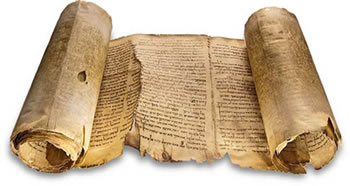
This misconception became far harder to maintain after 1946, when shepherds in the Judean Desert stumbled upon ancient jars containing what would become known as The Dead Sea Scrolls. Over a decade of excavation at Qumran, between 1946 and 1956, unearthed more than seven hundred fragmented documents. Among them were manuscripts that would transform our understanding of Scripture’s development and authenticity.
What Are The Dead Sea Scrolls?
The Dead Sea Scrolls represent one of the most significant archaeological discoveries of the twentieth century. These ancient manuscripts were hidden in caves near the settlement of Qumran, about a mile inland from the Dead Sea, in what is now the West Bank. The texts were preserved in sealed clay jars, protected from the region’s extreme heat and aridity.
The collection includes biblical texts, theological commentaries, community rules, hymns, and works attributed to figures like Enoch and other ancient patriarchs. Some fragments are so deteriorated that only spectrography and advanced imaging can reveal their contents. What makes them extraordinary isn’t just their age, but their implications for how we understand the formation of Scripture.
The Significance of Ancient Biblical Manuscripts
Before the Qumran findings, scholars had little concrete evidence about which texts existed during the time of Jesus. Many argued that certain documents, particularly those attributed to Enoch, couldn’t have influenced the writers of The New Testament because they were supposedly composed centuries after Christ’s birth.
Then carbon-14 dating revealed the truth. Among the Dead Sea Scrolls discoveries were at least ten manuscripts of The First Book of Enoch, along with related texts like The Book of Jubilees and The Testaments of the Twelve Patriarchs. These manuscripts dated to at least 200 B.C., centuries before Christianity emerged. This discovery obliterated the scholarly consensus that had held for generations.
The implications rippled outward:
The books penned by Enoch existed during the Second Temple period and could have influenced Jesus and His disciples
The writers of The New Testament quoted or alluded to Enochic material at least one hundred times
The parallel teachings between Enoch and Jesus became far too numerous to dismiss as coincidence
The dismissal of these texts as “pseudepigrapha” could no longer rest on chronological arguments
How The Bible’s Canon Was Actually Formed
One great tragedy in biblical history is the widespread Western assumption that Scripture came to us as a hermetically sealed document handed down from on high. In reality, the process of determining which books were “acceptable” and which were heretical proved far messier and more political.
The choices were rarely made on grounds of personal conscience alone. Instead, the primary factor was which political system held power at a particular time and place. The Great Schism of the eleventh century split Christianity geographically: the Eastern Orthodox Church occupied the East while Catholic and Protestant branches dominated the West. This division meant that certain texts could be rejected in one region while remaining part of orthodox tradition in another.
The Dead Sea Scrolls provide tangible evidence of this complexity. We find fragments of canonical books alongside texts that would later be excluded from The Protestant Bible. We see which writings the Qumran community valued, what they copied repeatedly, and which theological interpretations they emphasized. Their preferences don’t always match what later councils decided.
What The Discoveries Reveal About Scripture
The Dead Sea Scrolls discoveries demonstrate several remarkable truths about biblical transmission and authority. First, they show that ancient Jewish communities possessed and treasured texts beyond what became the Protestant Canon. The Qumran library wasn’t trying to hide these books or apologize for them. They were standard religious literature.
Second, these manuscripts confirm the essential reliability of biblical texts. Despite copying across centuries, the texts of The Hebrew Bible found at Qumran align remarkably well with later medieval manuscripts. The Dead Sea Scrolls validate that scribal transmission was far more careful than skeptics assumed.
Third, The Scrolls reveal the richness of Second Temple Judaism. This wasn’t a monolithic faith with one approved reading list. Communities engaged with diverse theological perspectives, apocalyptic visions, and interpretive traditions. Jesus and his earliest followers lived within this textually complex world.
The parallels between Enoch’s teachings and Jesus’ sayings provide particularly striking evidence. When Jesus spoke of “rooms” in Heaven, he was drawing on language from Enoch’s description of “habitations of the elect.” When Jesus used the title “Son of Man” eighty-one times in the Gospels, he invoked terminology that originated in Enochic prophecy. These weren’t random coincidences. They suggest direct familiarity with these texts.
Understanding The Implications
The discovery of ancient biblical manuscripts changed everything about how scholars approach Scripture’s history. We can no longer pretend that the twenty-seven books of The New Testament and the thirty-nine of The Hebrew Bible simply appeared in their current form, approved by universal consensus. Instead, we now understand that:
Multiple sacred texts circulated in the ancient Jewish world
Different communities maintained different Canons
The process of standardization was gradual and geographically varied
Political and ecclesiastical authorities influenced which books survived
Texts deemed “lost” often remained alive in Eastern Orthodox and Roman Catholic traditions
Archaeological recovery allows us to study these sources directly
This doesn’t diminish Scripture’s authority or reliability. Rather, it enriches our understanding by showing us the full historical context in which Scripture developed and was preserved.
Why This Matters Today
For centuries, Western Protestantism taught that certain books were simply lost to history, inaccessible and unknowable. This narrative served a purpose: it justified excluding them from the Canon. But The Dead Sea Scrolls proved that narrative incomplete.
Now we have the opportunity to examine these texts for ourselves. We’re no longer dependent on institutional gatekeepers debating whether such works could have existed or mattered. We can compare the teachings of Enoch directly with The New Testament. We can see the striking parallels that scholars once denied were possible.
Common sense suggests that if the most brilliant biblical figures of antiquity valued these texts, read them, quoted them, and built their theology upon them, then perhaps we ought to reconsider our own dismissal of them. Truth emerges when artistic, scientific, and theological perspectives are synthesized rather than kept rigidly separate. The Dead Sea Scrolls discoveries invite us into exactly that kind of integrated, multidisciplinary understanding.
The recovery of these ancient manuscripts demonstrates that long-lost wisdom need not remain lost forever. By embracing both the canonical and the marginalized texts, by studying Scripture across geographical and denominational boundaries, we gain access to a fuller picture of God’s revelation throughout history. This is the promise of deeper investigation, here at The Lost Stories Channel: the chance to move beyond narrow institutional interpretations toward the broader, richer truth that connects faith, history, and the actual sources that our ancestors treasured.


