Lost Stories Gem #9
How to Read Apocryphal Texts Without Getting Lost
When you first encounter the word “apocryphal,” you’re likely to think of something suspicious, spurious, or untrustworthy. This common modern understanding creates an immediate barrier to exploring these texts fairly. But the word itself contains a hidden clue to why these works have been so misunderstood for centuries.
The true meaning of “apocryphal” comes from the Greek word apokryphos, which breaks down into two parts. The root word kryptos means “secret” or “hidden.” The prefix apo denotes reversal or cessation. So apocryphal literally means “the end of secrecy” or “the unveiling of what was hidden.” This is profoundly ironic: the very people who sought to discredit these texts inadvertently chose a word that revealed their ultimate destiny. No matter how many centuries of doubt obscured them, apocryphal texts would eventually become uncovered truth, revealed wisdom that had been sealed away until the time was right.
Jesus Himself spoke of this principle when he said in Matthew’s gospel: “Jesus spoke all these things to the crowd in parables. He didn’t say anything to them without using one… ‘I’ll open My mouth in parables; I’ll utter secret things which have been hidden since the creation of the world.’” The mechanism of truth is hidden, veiled, obscure. It’s precisely what the word apocryphal describes: truth that is secret only to those without the tools of interpretation, but fully comprehensible to those on the inside who possess the keys to understanding.
Why the Canonical Record Is Your Foundation
So, before you venture into apocryphal literature like The Book of Enoch, Jasher, Adam and Eve, or The Gospel of Nicodemus, you must first establish yourself firmly in the canonical texts. This isn’t negotiable. The canonical record, preserved across centuries through divine protection, serves as your prism for judging authenticity and interpreting what you encounter in parabiblical works.
The canonical texts are your anchor. They are your standard of measure. When you read apocryphal material, you must constantly filter it through what you already know from Scripture. As it is written: “In the mouth of two or three witnesses a thing is confirmed.” This biblical principle applies directly to your reading method. You should apply the same rigorous principle to apocryphal literature as you apply to canonical literature. Always compare Scripture with Scripture, and apocryphal accounts with their canonical counterparts.
This foundation prevents several dangers:
Mistaking cultural context for spiritual error
Accepting elaborations that contradict the canonical narrative
Reading modern biases back into ancient wisdom literature
Failing to recognize legitimate extensions of biblical accounts
The Binding of Isaac: A Case Study
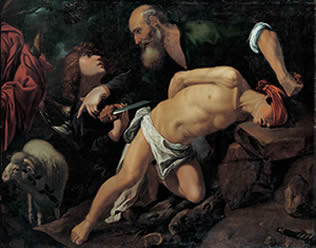
The story of Abraham taking Isaac to Mount Moriah demonstrates why apocryphal texts matter and how to read them correctly. In Genesis, the account is spare and troubling. Isaac appears as an ignorant child who has no idea what his father is planning. Yet theologians have long claimed Isaac as a “type of Christ,” foreshadowing Christ’s sacrifice at Calvary. But the canonical Genesis account creates problems with this interpretation.
If Isaac is meant to prefigure Christ, then why does Genesis show him as an unknowing boy? Christ was an adult who knew what He was doing and willingly offered Himself. If Isaac is a true type of Christ, then he would need to be aware of what was happening and consent willingly to his father’s intention. Yet the Genesis narrative provides no evidence of this.
Here is where The Book of Jasher resolves the problem. According to Jasher, Isaac was not a child at all but thirty-seven years old. More importantly, the text records a conversation where Isaac explicitly states: “As the God of Abraham lives, if He told Father to cut me into pieces and burn me as an offering, I wouldn’t hesitate. I’d gladly consent.”
Further, when Abraham and Isaac approached Mount Moriah, Jasher records that Isaac asked his father: “I see the fire, and I see the wood, but where’s the lamb to burn on the altar?” When Abraham explained that Isaac himself was chosen as the offering, Isaac responded: “As the Lord lives, Father, nothing is going to keep us from doing what God wants. I’m completely resolved. In fact, I thank the Lord for choosing me to be a burnt offering for Him.”
With these details from Jasher, every element that seemed missing from Genesis is now present. Isaac’s age, his knowledge, his willing consent, his adult acceptance of sacrifice. The type becomes complete. This is how apocryphal texts function at their best: they fill in gaps, resolve tensions, and demonstrate alignment with the same divine inspiration that produced the canonical record.
Reading with Discernment: The Essential Practice
When you approach apocryphal literature, adopt a stance of informed skepticism. This doesn’t mean cynicism. It means reading with one eye firmly on the canonical record while the other explores the parabiblical text. Ask yourself key questions:
Does this account contradict the established canonical narrative?
Does it clarify or expand details that were previously sparse or ambiguous?
Can I find echoes of this account elsewhere in Scripture, even if indirectly?
Does the spiritual principle align with what God has revealed in the canonical texts?
Does the language and theological framework match the era from which the text claims to come?
Yes, apocryphal texts may not bear the “official” designation of received Scripture. But they do constitute a body of ancient wisdom literature that has stood the test of time—texts that reveal a remarkable correspondence with the canonical record. When they align and elaborate rather than contradict and diminish, they offer believers genuine insight into narratives that canonical texts treated only in outline form.
The Hidden Becomes Revealed
Remember that truth—from a biblical perspective—is more often than not hidden. It requires spiritual discernment to perceive. As Paul wrote: “The man without the Spirit doesn’t accept the things that come from the Spirit of God, for they are foolishness to him and he can’t understand them because they are spiritually discerned.”
Apocryphal texts represent hidden wisdom that remained sealed until the time of its revealing. When you approach them with proper grounding in canonical Scripture and with genuine desire to understand, you participate in the recovery of long-lost knowledge that the early church found valuable enough to preserve and transmit.
The Lost Stories Channel has dedicated itself to recovering and presenting these narratives alongside essays that help you understand their place in the broader tapestry of faith, history, and truth. Whether you explore the books of Enoch, the expanded narratives of Jasher, or other apocryphal accounts, you’ll find that the tool of discernment combined with canonical knowledge transforms these texts from mysterious oddities into coherent expressions of divine wisdom that enrich rather than complicate your understanding of Scripture.


