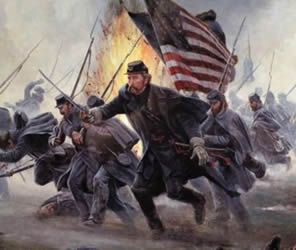
Soldiers, Executioners, and the Police
The Academia.edu Essay Chat
Soldiers, Executioners, and the Police: Questions Concerning the Biblical Mandate to Not Kill
“What does the sixth commandment, “You shall not kill,” really mean? Is it a blanket commandment against any taking of life?… Smith digs into the original Hebrew, ratzach, and shows that it’s closer to “murder” than just “kill”… That’s actually a pretty big difference… And Smith doesn’t stop at translation errors. He digs into the paradoxical nature of The Bible itself. His argument is that God doesn't give us simple, clean answers. In some parts, God commands deaths, orders wars… When Jesus weighs in, like in the Sermon on the Mount, He amps up the standard. It’s not just about killing or even murder. He mentions anger being destructive, too… That’s a real shift. The focus moves from just the act itself to the intent or the condition of your heart… So, if you’re a soldier or a cop, what you’re doing—if it’s not out of anger or malice—isn’t condemned by The Bible…”
To hear Academia.edu’s entire essay chat about Soldiers, Executioners, and the Police, CLICK BELOW.
To read along with the audio, SCROLL DOWN to see the transcript.
To learn more about Academia.edu’s work and mission, CLICK HERE.
The Academia.edu Essay Chat Transcript
HER: The paper we’re diving into today is Soldiers, Executioners, and the Police: Questions Concerning the Biblical Mandate to Not Kill by W. Kent Smith.
HIM: Yeah, and honestly, this one hit me right away. The title just grabs you. I mean, we’ve all heard: “Thou shalt not kill,” but Smith isn’t just taking it at face value, right? He’s pulling that commandment apart.
HER: Exactly. So, the core question Smith tackles is, well: What does the sixth commandment, “You shall not kill,” really mean? Is it a blanket commandment against any taking of life? Because that’s how a lot of people read it, and it can lead to, you know, a ton of guilt for people like soldiers or police officers or, gosh, even executioners.
HIM: Yeah, for sure. Smith’s point is that The Bible, and especially that commandment, is much less black and white than it first seems. He digs into the original Hebrew, ratzach, right, and shows that it’s closer to “murder” than just “kill.” That’s actually a pretty big difference.
HER: Yeah, and what I really appreciated is he frames it as this giant misunderstanding that’s shaped a lot of Western thinking, especially because of how The King James Bible translated it for centuries. For ages, English speakers just took it to mean all killing—period.
HIM: Which is sort of wild, isn’t it? Because like the same people quoting “Thou shalt not kill” were living in societies that went to war, had capital punishment, lynchings, all that.
HER: And Smith basically says that the translation kind of outpaced the context. It’s not that the original writers or even early translators didn’t notice the difference, but maybe they thought humanity needed the stronger warning. Like he suggests, we weren’t ready for nuance back then.
HIM: That makes me think of, I don’t know, how we still try to interpret laws as if they’re perfect, unbending things. But all this stuff was made by people, for people, in a certain time, with all their own baggage.
HER: Totally. And Smith doesn’t stop at translation errors. He digs into the paradoxical nature of The Bible itself. His argument is that God—he calls God the God of the Paradox—doesn’t give us simple, clean answers. In some parts, God commands deaths, orders wars. So, is God contradicting himself or are we missing something deeper?
HIM: Yeah, and Smith kind of says, look, The Bible is not a rule book so much as this, um, living document that reflects our own spiritual development. When Jesus weighs in, like in the Sermon on the Mount, He amps up the standard, right? It’s not just about killing or even murder. He mentions anger being destructive, too.
HER: Yeah, that’s a real shift. The focus moves from just the act itself to the, like, intent or the condition of your heart, which is way harder to navigate in law or public life.
HIM: For sure. And what that all means for listeners, for like everyday people, is Smith wants to cut through simple guilt traps. If you’re a soldier or a cop, what you’re doing—if it’s not out of anger or malice—he argues, isn’t condemned by The Bible.
HER: Yeah, he really wants people to let go of that, um, inherited shame if you’re acting for the collective good. But it doesn’t mean, you know, the commandments or The Bible are irrelevant. It just means they’re complicated. They’re something you wrestle with, not something you just, like, copy-paste into your life.
HIM: Right, which is kind of humbling. Like, maybe we shouldn’t be so quick to grab a Bible verse to win an argument. These texts, they’re invitations to think deeper, to keep growing.
HER: And you know, that reminds me, I once had this professor who said the hardest part of reading any sacred text is accepting that you might be the one who’s not getting it yet.
HIM: Yeah, I guess in the end, Smith’s point is: Keep asking, keep questioning. Don’t settle for easy answers, because the real answers, if they’re out there, are probably going to be messier than we want.
HER: That’s a good note to end on, I think. Embrace the nuance, keep reflecting, and, uh, maybe don’t use ancient Scripture as your only debate move.
HIM: Agreed. All right, thanks for digging into the paradox with me. Let’s keep learning.

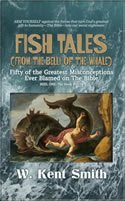
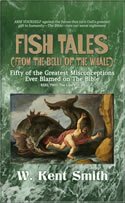
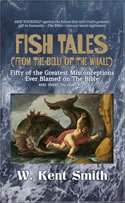
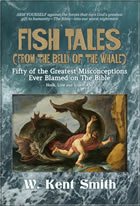
The preceding work is the by-product of a previously published book, entitled Fish Tales (From the Belly of the Whale): Fifty of the Greatest Misconceptions Ever Blamed on The Bible.
It’s available here on this website, as well as Amazon Books, Barnes and Noble Books, and Sacred Word Publishing. It’s available as a complete work and as a three-part series, as a paperback and an e-book; and Reel One is available as an audiobook.
Previews of Fish Tales (From the Belly of the Whale)
To Read Further, go to:
AN UNRELENTING SEARCH—to see if you can tell the difference between a genuine message from The Bible and a counterfeit version.
THE MIRROR OF TRUTH—to find out why we eagerly run toward the light one day and then eagerly flee from it the next.
TURNING LIGHT INTO DARKNESS—to discover why it’s so easy to dissect Scripture from its context and reshape it into something else.
CONCEPTS IN MISCONCEPTIONS—to find that many of the biblical truths we’re being sold are a mere shadow of the original facts.
BEFORE THE TOWER—to discover the true origins of human language, not from the traditions of mankind but from The Bible itself.
ALL THE CURSES OF GOD—to learn what God’s word really tells us about the fate of mankind concerning His judgments.
WHEN THE DISCIPLES ASKED—to find out why Jesus wasn’t as concerned about Roman tyranny as His troubled disciples.
ALWAYS SLAVES IN EGYPT—to learn the real story of the Children of Israel before they became slaves in Egypt and why it’s so important.
GOD SENT SERPENTS—to find out the real reason why venomous snakes attacked the Children of Israel in the Wilderness.
ABRAHAM SACRIFICES HIS SON—to find out how Isaac can still be called a type of Christ even though Genesis describes him as an unwitting lad.
MOSES THE LONELY SHEPHERD—to find out what Moses really did for those forty years before God called him to lead the Israelites out of Egypt.
ONLY HUMANS GET IN—to find that the Scriptures are clear that God created the animal and human kingdoms out of the very same material.
ALL STUDENTS OF THE ZODIAC—to learn the truth about God’s purpose in creating the stars and the forces that keep humanity from understanding it.
JESUS THE CARPENTER’S SON—to find out the real story of Jesus’ family background and upbringing prior to His rise to prominence.
MARY WAS BORN OF A VIRGIN—to learn how Protestants and Catholics can finally come together concerning a centuries-old cause for division.
WHEN JESUS COMMENDED—to discover the real story about who Jesus is willing to bless for their act of giving a cup of cold water.
THEY DEMANDED A SIGN—to find out what the greatest miracle worker of all time said about God’s desire to provide signs to humanity.
JESUS WAS BORN IN DECEMBER—to learn the truth about the real Christmas story and why it’s so important to stop avoiding the subject.
JESUS NEVER ANSWERED PILATE—to find out what really happened when Pilate asked Jesus the question we all want answered.
THE CALL OF CHRIST—to discover the real story about the circumstances surrounding one’s response to Jesus’ call to follow Him.
NOT EVEN GOD CAN FIND THEM—to find out why the Lost Tribes of Israel got lost and how God intends to write the last chapter of their story.
To hear author and historian W. Kent Smith talk about his book Fish Tales (From the Belly of the Whale), CLICK HERE.
To hear an audio presentation of Fish Tales, CLICK HERE.
To watch a video presentation of Fish Tales, CLICK HERE.
To read a preview from the paperback version of Fish Tales, CLICK HERE.